

Llegué temprano para Nochebuena a casa de mi hermano y encontré a mi hijo sentado solo en el garaje, comiendo un bocadillo de gasolinera mientras los otros niños estaban dentro en la mesa.
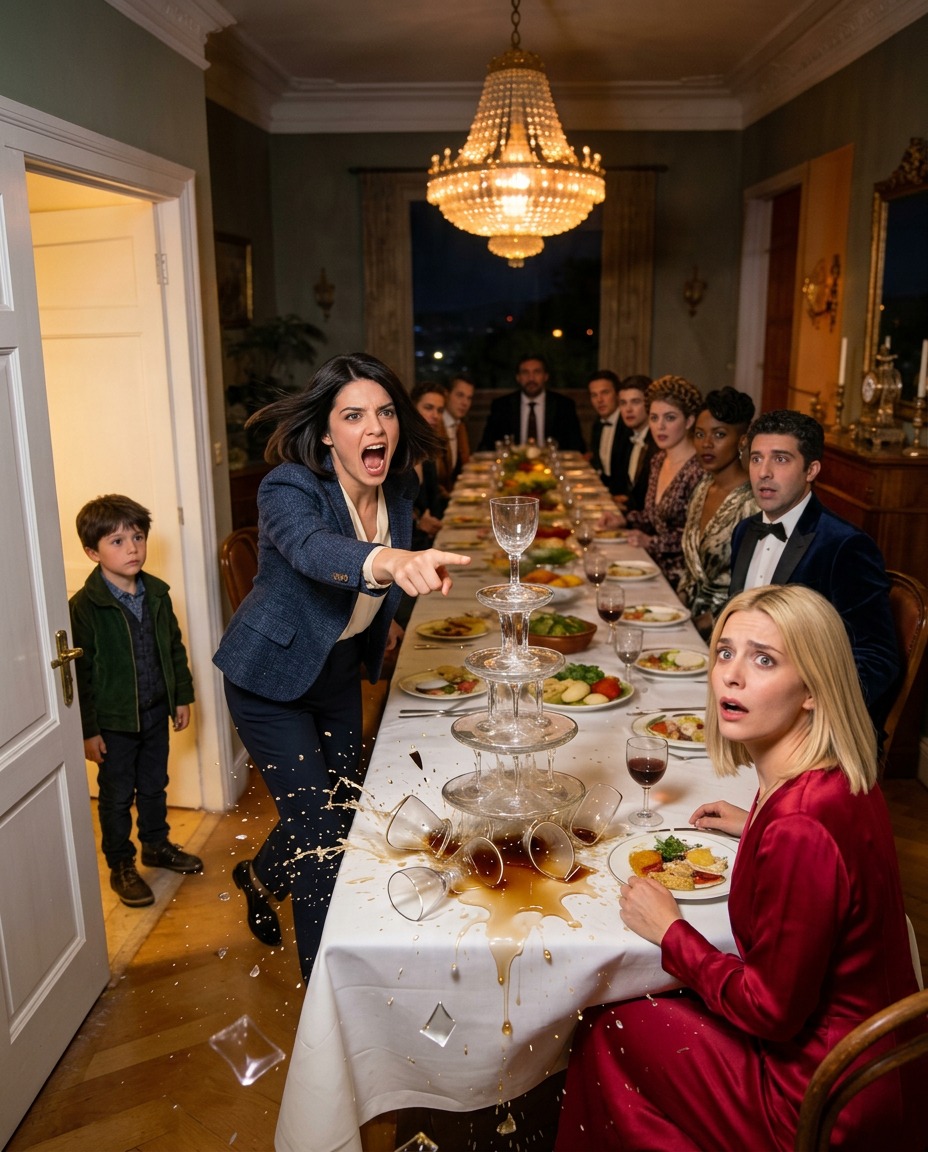
Me miró con lágrimas en los ojos y susurró: "La tía Patricia dijo que los niños del café huelen mal." Entré directamente, derribé la torre de champán y lo que dije a continuación dejó a treinta y cinco invitados sin palabras.
Había llegado temprano porque siempre he odiado llegar tarde a las reuniones familiares. Llegar tarde te convierte en un espectáculo—y esa noche no necesitaba más atención de la que ya necesitaba. Aparqué fuera, noté el cálido resplandor de las luces de la casa y escuché risas que venían del interior. Todo parecía perfecto. Demasiado perfecto.
Entonces vi la puerta del garaje entreabierta.
Dentro, bajo una luz blanca y intensa, mi hijo Bruno, de once años, estaba sentado en una silla plegable, aún con la chaqueta puesta, sosteniendo un sándwich envuelto en ambas manos. Un refresco barato estaba a sus pies. Por un momento, no pude procesar lo que estaba viendo.
"¿Bruno?"
Alzó la vista, con los ojos rojos, los labios temblorosos—el tipo de expresión que tienen los niños cuando llevan demasiado tiempo conteniendo las lágrimas.
"La tía Patricia dijo que los niños de la cafetería huelen mal."
Me di cuenta al instante. Bruno pasaba las tardes ayudando en mi cafetería: haciendo los deberes, repartiendo servilletas, aprendiendo la caja registradora. Patricia siempre había menospreciado mi trabajo, ocultándolo tras sonrisas educadas. Pero nunca imaginé que humillaría a mi hijo así.
"¿Quién te dio eso?" Pregunté, señalando el bocadillo.
"Primo Nico. Dijo que estaría más cómodo aquí."
Más cómodo. En un garaje. Mientras estaban dentro, los invitados cenaban con copas de cristal y servilletas de lino.
I didn’t think. I just walked inside.
The living room was full—thirty-five guests under warm light. Patricia stood pouring champagne, confident and composed. Álvaro laughed near the tree. The children sat at a long table, dressed up and smiling.
I walked straight to the champagne tower—
—and pushed it over.
Glass shattered across the floor. Champagne spilled everywhere. The room froze.
Then I pointed directly at her.
“If my son isn’t good enough to sit at this table because he ‘smells like coffee,’ then none of you deserve to celebrate in front of me tonight.”
Silence. Complete and crushing.
And then I said what truly broke everything.
“You’re all going to hear exactly who Patricia really is—and how long you’ve let her turn cruelty into something acceptable.”
No one moved. Not even my brother.
I wasn’t going to let this be brushed aside like always.
“This isn’t a misunderstanding,” I said. “A misunderstanding is getting a date wrong. Sending a child to eat alone in a garage because of his mother’s job—that’s humiliation.”
Bruno stood quietly in the doorway behind me, still holding his sandwich. That gave me strength.
Patricia tried to dismiss me, calling it a scene. But I had stayed silent for years—years of comments about my work, my life, my son. And suddenly, I understood: their silence wasn’t peace. It was complicity.
I took the sandwich from Bruno and placed it right on the table next to the expensive dishes.
“Look at it,” I said. “This is what you chose to give an eleven-year-old child tonight.”
No one could look away.
And then Nico—her own son—stood up. Pale, shaking.
“Mom said it,” he admitted. “She said Bruno shouldn’t sit with us… and told me to bring him food outside.”
Everything collapsed after that.
Even the children spoke the truth.
There was no way to hide it anymore.
I looked at my brother, waiting for him to finally say something that mattered.
But he didn’t.
So I made the decision myself.
Para ver as instruções de preparo completas, vá para a próxima página ou clique no botão Abrir (>) e não se esqueça de COMPARTILHAR com seus amigos no Facebook.